
State Council Issues 15th Five-Year Plan for Intellectual Property Protection and Utilisation
Date: 31 July 2026
The Plan sets out the targets, key tasks, and special initiatives for intellectual property work during the 15th Five-Year Plan period. The principal contents are summarised below:
Development Targets. The Plan establishes phased development targets. By 2030, China’s overall intellectual property strength and international competitiveness will be further enhanced, and decisive progress will be achieved in building China into a strong intellectual property powerhouse. The Plan also sets out the following indicative targets for intellectual property development during the 15th Five-Year Plan period:
Indicative Targets for Intellectual Property Development During the 15th Five-Year Plan Period
|
No. |
Indicator |
2025 |
2030 |
|
1 |
Number of high-value invention patents owned per 10,000 people |
16 |
>22 |
|
2 |
Value added of intellectual property (patent)-intensive industries as a percentage of GDP |
13.38%* |
14.60% |
|
3 |
Value added of copyright-related industries as a percentage of GDP |
7.46%* |
7.53% |
|
4 |
Aggregate value of royalties and other fees related to intellectual property in international trade |
RMB 1.96 trillion (approx. US$290.7 billion) |
RMB 2 trillion (approx. US$296.6 billion) |
|
5 |
Direct output value of geographical indication products |
RMB 969 billion (approx. US$143.7 billion)* |
RMB 1.1 trillion (approx. US$163.1 billion) |
|
6 |
Public satisfaction score for intellectual property protection |
82.81 |
83.90 |
Notes:
By 2035, China’s overall intellectual property competitiveness will rank among the highest globally, and China will have largely established itself as a strong intellectual property powerhouse with Chinese characteristics and world-class standards.
Key Tasks: the Plan establishes core tasks across four principal dimensions, namely protection, utilisation, administration, and international cooperation:
Special Initiatives. The Plan establishes twelve key special initiatives designed to address the needs of industrial development and opening-up. These initiatives cover priority areas including intellectual property protection for strategic emerging industries, the mutual empowerment of intellectual property and artificial intelligence, intellectual property services supporting regional development, and high-quality intellectual property cooperation under the Belt and Road Initiative. Through the implementation of these special initiatives, the Plan seeks to promote more targeted and high-quality development of China’s intellectual property sector.
Source: The State Council
https://www.gov.cn/zhengce/content/202607/content_7077199.htm
SPC Releases Major Data on Judicial Trial Work for First Half of 2026
Date: 16 July 2026
The Supreme People’s Court (SPC) released major data on judicial trial work for the first half of 2026. The principal contents are summarised below.
Overall Judicial Trial Work. Courts across China accepted 21.3165 million cases in all categories, representing a year-on-year increase of 1.15%. Among these, courts accepted 730,000 criminal cases, representing a year-on-year decrease of 5.82%; 13.6269 million civil and commercial cases, representing a year-on-year decrease of 1.32%; 405,500 administrative cases, representing a year-on-year increase of 6.41%; and 6.1767 million enforcement cases, representing a year-on-year increase of 10.12%.
Continued Improvement in the Overall Quality and Efficiency of Adjudication. The rate of hearings held in second-instance proceedings increased by 2.09% year on year, while the rate of withdrawal following civil mediation increased by 3.87% year on year. As of the end of June, the number of litigation cases pending for more than three years before courts across China had decreased by 23.99% year on year, demonstrating notable progress in the resolution of long-pending cases.
Significant Progress in Diversified Dispute Resolution. Primary people’s courts across China had established connections with 25,700 township and subdistrict comprehensive social governance centres, enabling a substantial number of disputes to be resolved through one-stop services at such centres. Courts nationwide successfully conducted pre-litigation mediation in 2.7081 million cases of all categories, representing 1.81 times the number recorded during the same period in the previous year.
Strengthened Standardisation of Litigation Services. Courts at all four levels across China provided one-stop online litigation services, and nearly 700,000 lawyers had registered to use the ‘People’s Courts Online Services’ platform. Courts continued to issue model litigation documents, and 70.02% of parties and lawyers elected to submit element-based statements of claim when applying to file cases, representing an increase of 18.82% compared with the same period in the previous year.
Intellectual Property Disputes. People’s courts accepted 250,600 first-instance civil intellectual property cases, representing a year-on-year decrease of 18.41%. They also accepted 7,484 first-instance unfair competition cases, representing a year-on-year increase of 9.59%.
Source: The SPC
https://www.court.gov.cn/zixun/xiangqing/506211.html
SPC Dismisses Pinduoduo’s Retrial Petition and Upholds RMB 1 Million (Approx. US$148,300) Damages Award in ‘miHoYo v. Pinduoduo’ Unfair Competition Case
Date: 3 July 2026
The Plaintiff, miHoYo, is the lawful operator of and rights holder in the Genshin Impact game. miHoYo contended that, following extensive marketing and operation over an extended period, the Genshin Impact game and related identifiers, including its name, characters, and in-game currency known as ‘Primogems’, had acquired an extremely high degree of market recognition among the relevant public.
Without obtaining any authorisation, the Defendant, Pinduoduo, published Genshin Impact-themed promotional assignments on major video platforms and recruited social media content creators to produce related video content. Pinduoduo also extensively used elements of the Genshin Impact intellectual property in its promotional activities to conduct false advertising and attract user traffic, although it was unable to provide the advertised in-game primary premium currency, ‘Primogems’, thereby causing consumer confusion and misidentification. miHoYo subsequently filed an unfair competition lawsuit, requesting that the Court order Pinduoduo to cease the infringement, eliminate the adverse effects, and compensate miHoYo for its economic loss.
The first-instance court held that Pinduoduo’s acts constituted unfair competition through false advertising and ordered Pinduoduo to compensate miHoYo for economic loss and reasonable expenses totalling RMB 350,000 (approx. US$51,900). Following the first-instance judgment, both miHoYo and Pinduoduo appealed. At second instance, the Zhejiang High People’s Court held that Pinduoduo’s unauthorised use of elements of the game’s intellectual property not only constituted false advertising, but that its overall conduct also constituted unfair competition through imitation and confusion. The Court therefore increased the damages award to RMB 1 million (approx. US$148,300). Dissatisfied with the second-instance judgment, Pinduoduo filed a petition for retrial with the SPC.
Upon retrial review, the SPC held, in respect of the false advertising claim, that Pinduoduo’s promotional representation that consumers could ‘obtain 10,000 Primogems for RMB 1’ was inconsistent with the actual circumstances and had misled consumers. Accordingly, the second-instance court had not erred in finding that such conduct constituted false advertising. In respect of the imitation and confusion claim, the identifiers ‘Genshin Impact’ and ‘Primogems’ had acquired a relatively high degree of recognition through continuous promotion, and the Defendant’s conduct was sufficient to cause confusion among the relevant public. The second-instance court’s determination in this regard was therefore also correct. As to the amount of damages, the second-instance court had comprehensively considered factors including Pinduoduo’s subjective intent, the duration of the conduct, and the specific circumstances of the case. Its application of statutory damages and determination of an award of RMB 1 million (approx. US$148,300) were therefore not improper.
Ultimately, the Supreme People’s Court held that the grounds raised by Pinduoduo in support of its retrial petition could not be sustained. It dismissed Pinduoduo’s retrial petition and upheld the second-instance judgment awarding miHoYo RMB 1 million (approx. US$148,300) in damages.
Source: miHoYo Legal Department official account
https://mp.weixin.qq.com/s/dCWPGW0mt-umjtU8diEbrg
Suzhou Intermediate People’s Court Orders Molly Tea to Compensate Louis Vuitton RMB 10.3 Million (approx. US$1.53 million) for Infringing Exclusive Rights in Seven Registered Quatrefoil Floral Figurative Marks
Date: 2 July 2026
 |
 |
 |
|
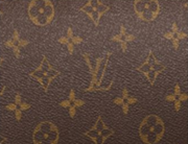
One of Louis Vuitton’s registered quatrefoil floral figurative trademarks involved in the case |
Example of Louis Vuitton’s use of the quatrefoil floral figurative trademark |
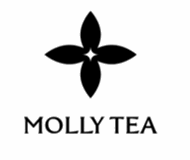
Four-petal symmetrical star sign used by Molly Tea |
According to publicly available media reports, the Plaintiff, Louis Vuitton Malletier, is the owner of the exclusive rights in seven registered quatrefoil floral figurative trademarks involved in the case. Louis Vuitton contended that the four-petal symmetrical star sign used by the Defendant, Molly Tea, was similar to the seven registered quatrefoil floral figurative trademarks in which Louis Vuitton owned exclusive rights and was likely to cause confusion among the relevant public. Louis Vuitton subsequently filed a lawsuit with the Suzhou Intermediate People’s Court.
At first instance, the Suzhou Intermediate People’s Court held that although quatrefoil patterns had been widely used in traditional human culture and modern creative works, the trademarks involved in the case were not simple geometric shapes or straightforward combinations of patterns that had entered the public domain. Rather, they embodied the designer’s concepts and creative expression. Through the use and recognition acquired by the composite trademarks, the four-pointed star sign itself had developed a certain degree of distinctiveness.
The Court further held that the essential consideration in determining whether the use of a sign constituted trademark use or merely decorative use was whether the sign was used solely for aesthetic or decorative purposes, or whether it enabled the relevant public to distinguish the provider and specific source of the goods or services. Even where the use of a sign objectively performed an aesthetic function, it would constitute trademark use if it allowed consumers to directly associate the sign with a particular brand.
The accused sign was substantially identical to the trademarks involved in the case in terms of design style, arrangement of elements, and outline and treatment of lines. Given the prevalence of co-branding and collaborative promotional campaigns between the tea beverage industry and luxury goods or well-known brands, ordinary consumers might not mistakenly believe that Molly Tea’s products originated from Louis Vuitton, but they might mistakenly believe that a co-branding arrangement or another specific commercial association existed between the two parties.
Ultimately, the Suzhou Intermediate People’s Court ordered Molly Tea to immediately cease the infringing conduct and compensate Louis Vuitton for economic loss and reasonable expenses totalling RMB 10.3 million (approx. US$1.53 million). Following the issuance of the first-instance judgment, Molly Tea’s founder reportedly stated to the media that the company would appeal. The complete written judgment has not yet been publicly disclosed.
Source: Guancha.cn, IP Code
https://www.guancha.cn/economy/2026_07_02_822413.shtml
https://mp.weixin.qq.com/s/rPgAryJiAKJfS6ybOycLqw
国务院印发《知识产权保护和运用“十五五”规划》
日期:2026年7月31日
《规划》明确了“十五五”时期开展知识产权工作的目标指标、重点任务与专项工程,主要内容如下:
|
“十五五”时期知识产权发展预期性指标 |
|||
|
序号 |
指标 |
2025年 |
2030年 |
|
1 |
每万人口高价值发明专利拥有量(件) |
16 |
>22 |
|
2 |
知识产权(专利)密集型产业增加值占国内生产总值比重(%) |
13.38* |
14.60 |
|
3 |
版权产业增加值占国内生产总值比重(%) |
7.46* |
7.53 |
|
4 |
知识产权使用费进出口总额(亿元) |
〔19600〕 |
〔20000〕 |
|
5 |
地理标志产品直接产值(亿元) |
9690* |
11000 |
|
6 |
知识产权保护社会满意度(分) |
82.81 |
83.90 |
注:①“每万人口高价值发明专利拥有量”是指每万人口本国居民拥有的经国家知识产权局授权的符合下列任一条件的有效发明专利数量:1.战略性新兴产业的发明专利;2.在海外有同族专利权的发明专利;3.维持年限超过10年的发明专利;4.获得国家科学技术奖、中国专利奖的发明专利。②〔〕内为5年累计数。③带*号的为2024年数据。
到2035年,我国知识产权综合竞争力将跻身世界前列,基本建成兼具中国特色、世界水平的知识产权强国。
资料来源:国务院
新闻链接:https://www.gov.cn/zhengce/content/202607/content_7077199.htm
最高法公布2026年上半年司法审判工作主要数据
日期:2026-07-16
根据最高人民法院公布的2026年上半年司法审判工作主要数据,核心内容总结如下:
资料来源:最高人民法院
新闻链接:https://www.court.gov.cn/zixun/xiangqing/506211.html
最高法裁定驳回拼多多再审申请,维持“米哈游诉拼多多不正当竞争案”100万元原审赔偿判决
日期:2026-07-03
原告米哈游公司系《原神》游戏的合法运营方及权利人。米哈游主张,经长期的市场推广与运营,《原神》游戏及其相关名称、角色、道具货币(如“原石”)等标识在相关公众中已建立起极高的市场知名度。被告拼多多在未获得任何授权的前提下,擅自在各大视频平台发布《原神》游戏主题推广任务,面向自媒体博主招募制作相关视频内容。同时,拼多多在推广中大量使用《原神》游戏IP元素进行虚假宣传引流,但实际上无法提供游戏内的道具货币“原石”,导致消费者产生混淆及误认。米哈游遂以不正当竞争为由提起诉讼,请求法院判令拼多多停止侵权、消除影响并赔偿经济损失。
一审法院审理认定,拼多多的涉案行为构成虚假宣传的不正当竞争,判令拼多多赔偿米哈游经济损失及合理开支共计35万元。一审宣判后,米哈游与拼多多均不服,提起上诉。浙江高院二审认定拼多多未经授权借用游戏IP元素的行为不仅构成虚假宣传,其整体使用行为还构成仿冒混淆的不正当竞争,遂将赔偿金额提升至人民币100万元。拼多多不服二审判决,向最高法提出再审申请。
最高法再审认为,关于虚假宣传行为,拼多多“1元抢一万原石”的宣传与真实情况相违背,误导了消费者,二审认定构成虚假宣传并无不当;关于仿冒混淆行为,“原神”“原石”等标识伴随持续宣传具有较高知名度,被诉行为足以导致相关公众产生混淆,二审认定同样正确;关于赔偿数额,二审法院综合考虑拼多多的主观故意、行为持续时间及具体情节等因素,适用法定赔偿确定100万元赔偿额亦无不当。最终,最高法认定拼多多提出的再审申请理由不能成立,裁定驳回拼多多的再审申请,维持二审100万元赔偿的判决结果。
资料来源:米哈游法务部
新闻链接:https://mp.weixin.qq.com/s/dCWPGW0mt-umjtU8diEbrg
江苏苏州中院:茉莉奶白侵害LV公司7件四叶花卉图形注册商标专用权,应赔偿LV经济损失及合理开支共1030万元
日期:2026-07-02
|
|
|
| LV涉案四叶花卉图形注册商标之一 | LV涉案四叶花卉图形使用场景 | 茉莉奶白使用的四瓣对称星型标识 |
媒体公开报道显示,原告路易威登(LV公司)系涉案7件四叶花卉图形注册商标的专用权人。LV公司主张,被告茉莉奶白公司使用的四瓣对称星型品牌标识与LV享有专用权的7件四叶花卉图形注册商标构成近似,容易导致相关公众产生混淆,遂诉至苏州中院。
苏州中院一审认为,“四叶草图案在人类传统文化和现代创意中被广泛使用,但涉案商标并非简单的几何图形或者其他进入公有领域图案的简单组合,体现了设计者的理念和思想的表达。随着组合商标的使用和获得的知名度,该四角星标识本身具有了一定的辨识度;判断某一标识是构成商标性使用还是装饰性使用,核心在于该使用行为是仅为了美观,用于装饰还是使相关公众通过该标识区分商品或服务的提供者及具体来源,即便客观上该标识的使用具有美观作用,只要它能让消费者直接联想到特定品牌就构成商标性使用;被诉标识与涉案商标在设计风格、元素布局、线条勾勒等方面基本相同,鉴于奶茶茶饮行业普遍存在与高端商品或知名品牌联名宣传,普通消费者在购买时可能不会将被诉产品误认为来源于路易威登,但可能会误认两者之间存在联名或其他特定关联关系。”
最终,苏州中院一审判令茉莉奶白公司立即停止侵权行为,并赔偿LV公司经济损失及合理开支合计1030万元。该一审判决作出后,茉莉奶白创始人回应媒体称其“将上诉”。目前本案的完整判决书尚未披露。
资料来源:观察者网、知产库
新闻链接:https://www.guancha.cn/economy/2026_07_02_822413.shtml
https://mp.weixin.qq.com/s/rPgAryJiAKJfS6ybOycLqw